

Accounting
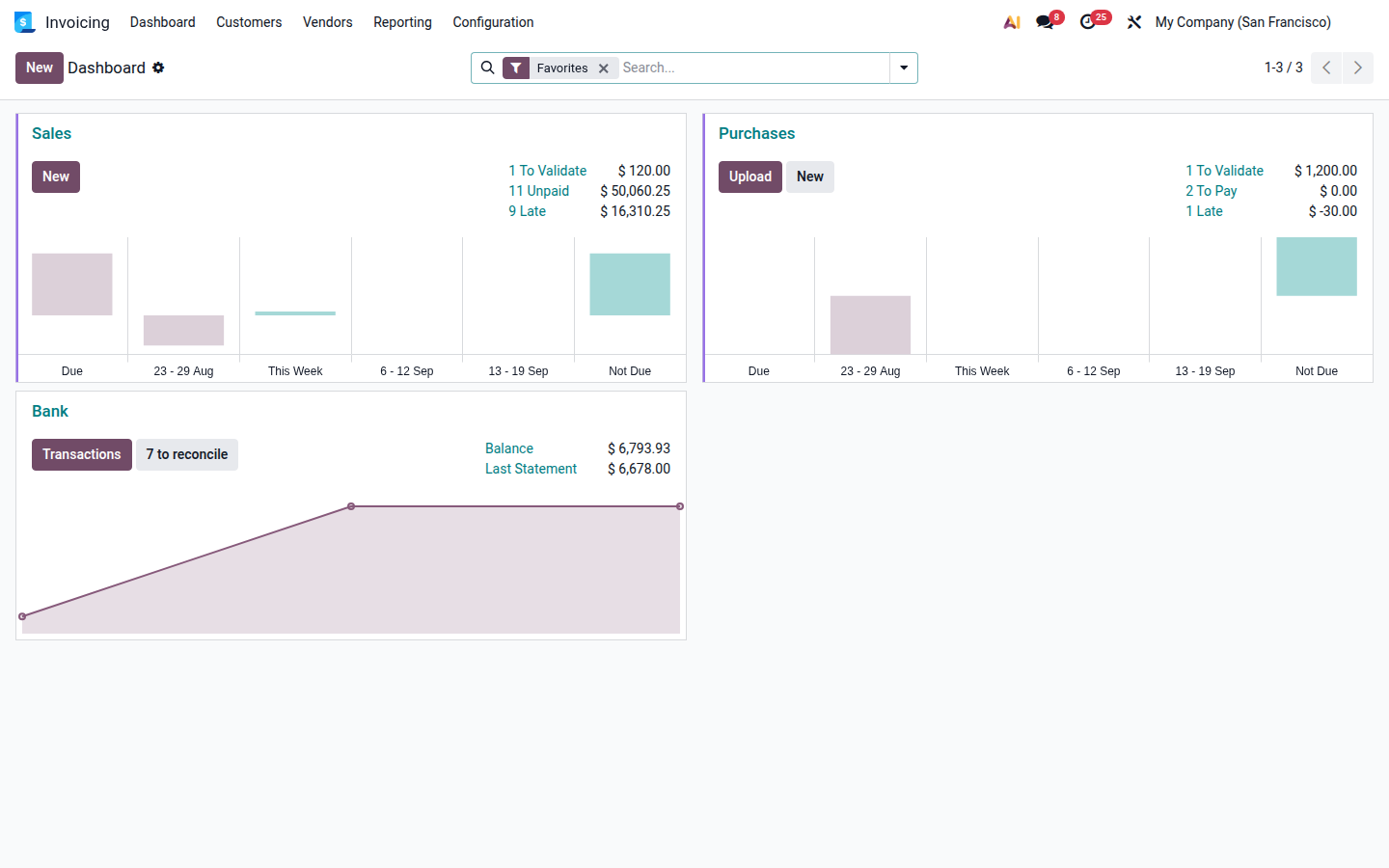
Quick summary: The Accounting dashboard shows important journals and open obligations. Posting, tax reporting, and period closing require the appropriate accounting access.
Guides
Expenses and reimbursementsRecord individual expenses, obtain approval, post them and reimburse employees.
InvoicesEssential fields, statuses, and safe handling of customer and vendor invoices.
PaymentsIndividual payments, SEPA batches, and the transition from in payment to paid.
ReportingFinancial reports, VAT records, partner ledgers, Intrastat, and operational purchase and sales checks.
Fixed assetsCreate assets, calculate depreciation, link bills, and change asset value.
Sell or dispose of an assetClose an asset with the correct date, sale document, and gain or loss.
Inventory valuationInspect stock quantities, receipt values and vendor-bill corrections, then reconcile inventory valuation with the general ledger.
Set up stock accounting for manufacturing and wholesaleConfigure periodic or perpetual valuation and trace value from a vendor bill to production consumption or sale.
Allocate freight and customs with landed costsAdd approved freight, customs, and handling charges to the value of received goods.
Import opening balancesPrepare balanced opening entries and outstanding receivables and payables.
Assign analytic costsAllocate invoice and bill lines to the correct project, department, or cost center.
Plan and review analytic budgetsSeparate potential and won work, compare each budget with actual revenue and costs, and export a reproducible report.
Complete month-end checksReview source documents, balances, and exceptions before accounting closes the period.